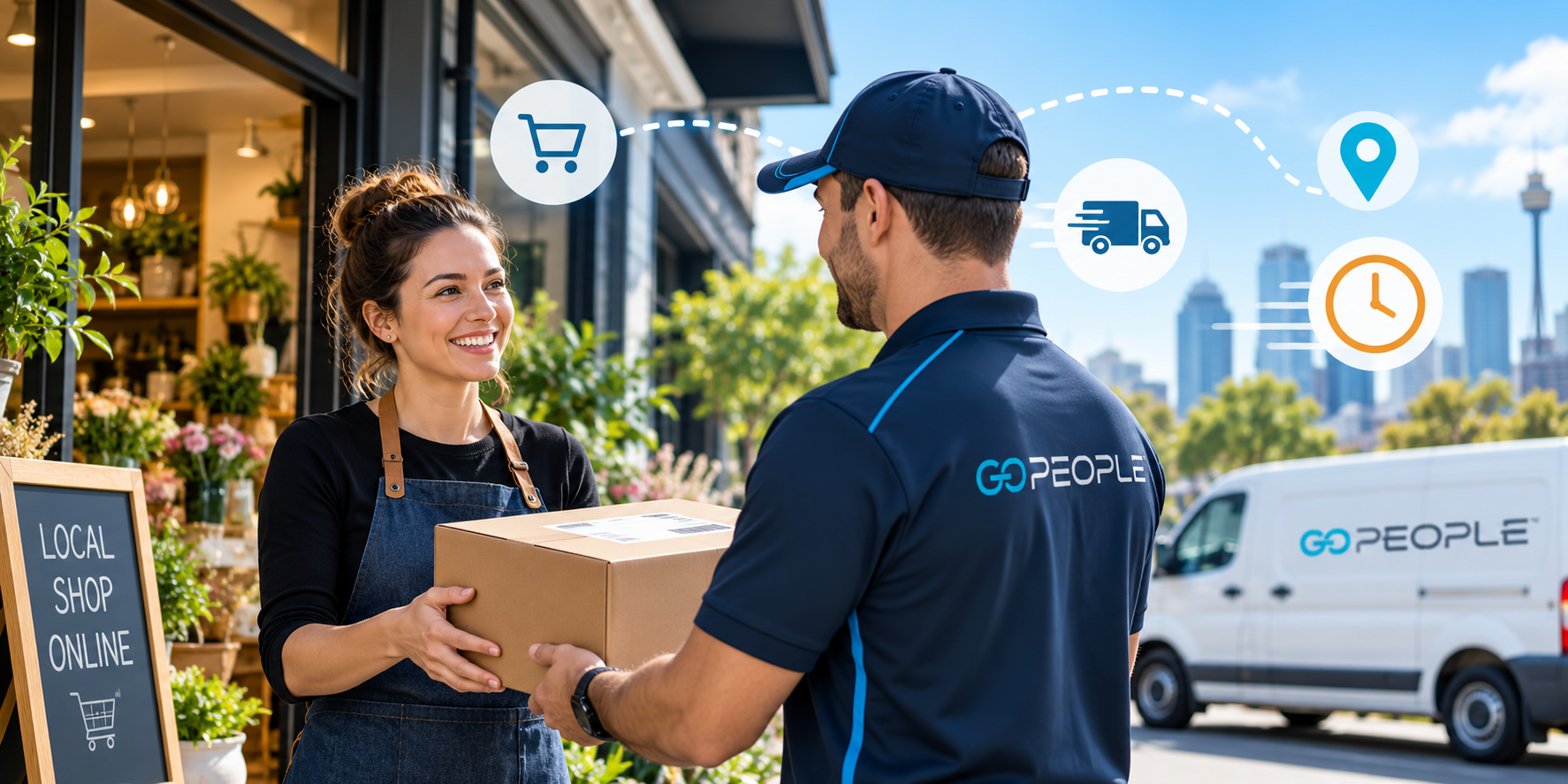
Same-Day Delivery for Retailers and Ecommerce: A Practical Guide
Same-day delivery can help Australian retailers serve local customers, respond to urgent orders and offer greater convenience. However, providing a faster delivery option is only worthwhile when the business can fulfil orders reliably and manage the associated costs.
For ecommerce businesses and physical retailers, successful same-day delivery requires more than finding a courier. Inventory availability, order cut-off times, warehouse processes, delivery distances and customer communication all play important roles.
This guide explains where same-day delivery fits into modern retail operations, when it makes commercial sense and how businesses can introduce it without creating unnecessary complexity.
1. When Same-Day Delivery Makes Sense for Retailers
Not every ecommerce order needs to arrive on the day it is placed.
For many customers, a reliable next-day or standard delivery service is sufficient. Same-day delivery becomes more valuable when the timing of an order matters.
Common examples include:
- Urgent purchases: Customers need an item for an event, appointment or immediate use.
- Local retail orders: A store has an item in stock and can arrange delivery within its surrounding metropolitan area.
- Replacement products: A customer needs a replacement item quickly.
- Time-sensitive business supplies: A business customer requires stock, equipment or materials without waiting for a standard delivery cycle.
- Premium customer experiences: A retailer wants to offer a faster option for eligible orders.
The important question is not whether every order can be delivered on the same day. It is whether the service solves a genuine customer need at a sustainable cost.
2. Using Local Stores as Fulfilment Locations
Physical stores can offer an advantage for retailers that already hold inventory close to their customers.
Instead of sending every ecommerce order from a central warehouse, a retailer may be able to dispatch an eligible order from a nearby store.
This approach is often called ship-from-store.
For example, a customer places an online order in the morning. The retailer identifies a nearby store with the item in stock, prepares the order and arranges a same-day courier collection.
However, successful ship-from-store operations depend on several conditions:
- Store inventory records must be accurate.
- Staff must know which orders require preparation.
- Products must be packed and ready before the courier arrives.
- Collection and delivery locations must fall within the available service area.
- Customers must receive realistic delivery expectations.
A nearby store is useful only when it can prepare orders consistently. Poor stock accuracy or slow picking processes can undermine the benefit of a faster courier.
3. Setting Realistic Order Cut-Off Times
One of the most important decisions in same-day delivery is establishing an appropriate order cut-off time.
A retailer needs sufficient time to receive the order, confirm payment, locate the product, pack it, book the courier and complete delivery within the applicable service window.
For example, a business might accept same-day delivery orders until a particular afternoon cut-off, provided the products are in stock and the destination is eligible.
The correct cut-off depends on the retailer’s preparation process and the delivery service being used.
Businesses should consider:
- How long staff need to prepare an average order.
- Whether inventory is held in a store or warehouse.
- When couriers can collect the parcels.
- How far delivery destinations are from the collection location.
- Whether the recipient is a residence, business, school or another location with access restrictions.
It is better to offer a reliable same-day option to a defined group of customers than to promise delivery too broadly and regularly miss expectations.
4. Choosing the Right Same-Day Delivery Model
Different delivery requirements call for different courier arrangements.
A retailer dispatching one urgent parcel has different needs from a business delivering 30 orders across a metropolitan area.
Individual Same-Day Deliveries
When orders are going to separate destinations and need to be booked individually, a same-day courier service may be appropriate.
GoSAMEDAY is designed for businesses requiring same-day deliveries, with the applicable service conditions depending on the booking and location.
Multiple Deliveries from One Collection Point
Retailers with several orders ready at the same time may benefit from combining them into a multi-drop delivery run.
Instead of arranging a completely separate collection and delivery process for every order, the business can organise multiple destinations into one delivery operation.
GoBUNDLE supports this type of multi-drop delivery requirement, with route planning helping businesses organise multiple stops.
Urgent On-Demand Deliveries
Some deliveries cannot wait for the next scheduled dispatch.
For urgent or specialised requirements, GoVIP provides an on-demand delivery option.
The appropriate service depends on delivery urgency, parcel requirements, collection location, destination and cost.
5. Improving Warehouse and Store Dispatch Processes
A fast courier cannot compensate for an order that is not ready for collection.
Retailers should examine their internal dispatch process before expanding same-day delivery.
Confirm Stock Before Promising Delivery
Inventory availability should be checked before a customer receives a same-day delivery commitment.
If the item is unavailable, the business should provide an alternative delivery option rather than relying on a last-minute stock transfer.
Standardise Packing
Staff should have clear instructions covering packaging, labels, delivery addresses and any handling requirements.
Consistent packing reduces avoidable delays during courier collection.
Separate Urgent Orders
Same-day orders should be easy for fulfilment staff to identify.
This might involve a dedicated picking queue, a separate packing area or a clear priority indicator in the order management system.
Prepare Parcels Before Collection
Where possible, parcels should be ready before the courier arrives.
Reducing waiting time helps keep the delivery operation predictable.
6. Using Route Optimisation for Multiple Deliveries
Route planning becomes increasingly important when a business needs to deliver several orders from one location.
A poorly planned route may involve unnecessary travel, repeated journeys through the same suburbs or delivery attempts at unsuitable times.
Route optimisation helps organise delivery stops into a more practical sequence, taking account of the information available to the routing system.
For retailers, potential benefits include:
- Less unnecessary driving between delivery destinations.
- Better coordination of multiple orders.
- Improved visibility of the planned delivery run.
- More efficient use of available driver time.
- Easier planning during busy dispatch periods.
These benefits depend on the actual delivery locations, number of stops, traffic conditions and operational constraints.
Businesses managing regular multi-drop deliveries can also read our guide to delivery route optimisation.
7. Keeping Customers Informed
Fast delivery is valuable, but customers also want to know what is happening to their orders.
Clear communication helps reduce uncertainty, particularly when customers need to be available to receive a parcel.
A retailer should consider providing information at key stages:
- Order confirmed: The order has been received.
- Preparing for dispatch: The item is being picked and packed.
- Courier collected: The parcel has entered the delivery process.
- Delivery in progress: Tracking information is available where supported.
- Delivery completed or unsuccessful: The customer receives an appropriate status update.
The precise notifications and tracking information available depend on the delivery service and its integration with the retailer’s systems.
Businesses should also establish a process for handling unsuccessful deliveries, incorrect addresses and recipient enquiries.
8. Understanding the True Cost of Same-Day Delivery
A courier booking fee is only one part of the total delivery cost.
Retailers should also consider fulfilment labour, packaging, administration, failed delivery attempts, customer support and any additional handling requirements.
For example, a retailer might spend more on a same-day courier service but reduce internal delivery coordination work. Another retailer might find that individual urgent deliveries are too expensive for low-value orders.
The right decision depends on the complete cost of the operation.
Useful questions include:
- How much does each successfully completed delivery cost?
- How much time does the team spend preparing and dispatching orders?
- How frequently are deliveries unsuccessful?
- How many customer enquiries are generated by delivery problems?
- Could several deliveries be grouped into a multi-drop run?
- Should customers pay an additional fee for faster delivery?
Retailers do not necessarily need to offer same-day delivery free of charge. A clearly communicated delivery fee may be appropriate when the service provides additional convenience.
9. Can Same-Day Delivery Support More Sustainable Operations?
Delivery speed alone does not determine environmental impact.
The outcome depends on factors such as vehicle type, distance travelled, parcel density, routing efficiency and the number of delivery attempts.
For example, grouping nearby deliveries into an efficient multi-drop route may reduce unnecessary travel compared with several separate journeys.
However, urgent individual deliveries may require dedicated trips, which can increase travel requirements.
Retailers looking to reduce unnecessary transport activity should focus on practical measures:
- Consolidate deliveries when timing permits.
- Improve address accuracy.
- Reduce failed delivery attempts.
- Plan collection and dispatch schedules carefully.
- Avoid unnecessary transfers between fulfilment locations.
Businesses should not assume that a faster service is automatically more sustainable. Environmental claims should be supported by appropriate operational evidence.
10. How to Measure Same-Day Delivery Performance
Before expanding same-day delivery, retailers should establish a small set of operational measures.
| Measure | What It Tells You |
|---|---|
| On-time delivery rate | Whether orders are completed within the promised delivery window |
| Cost per successful delivery | The actual cost of completing an order |
| First-attempt delivery success | How often deliveries succeed without another attempt |
| Order preparation time | How quickly the business gets parcels ready |
| Customer enquiries | Whether delivery communication is creating confusion |
| Delivery-related refunds or replacements | Whether delivery problems are generating additional costs |
Reviewing these measures helps a business determine whether its same-day delivery offering is improving customer service without creating excessive operational costs.
11. Introducing Same-Day Delivery Without Overcomplicating Operations
Retailers do not need to launch same-day delivery across every product and postcode immediately.
A controlled rollout can help identify problems before they affect a larger number of customers.
Step 1: Choose a Suitable Fulfilment Location
Start with a store or warehouse that has reliable stock information and a consistent dispatch process.
Step 2: Define the Delivery Area
Choose locations that can be served within the available courier service conditions.
Step 3: Set Product and Order Eligibility
Determine which products are suitable for same-day delivery and which require additional handling or longer preparation times.
Step 4: Establish a Cut-Off Time
Allow enough time for picking, packing, collection and delivery.
Step 5: Select the Appropriate Courier Service
Choose individual same-day, multi-drop or on-demand delivery according to the order profile.
Step 6: Measure the Results
Track successful deliveries, costs, operational problems and customer feedback.
Step 7: Expand Gradually
Increase the eligible delivery area, order volume or participating stores only when the initial process is operating reliably.
Frequently Asked Questions
Is same-day delivery suitable for every ecommerce business?
No. Same-day delivery is most useful when customers value rapid fulfilment and the business can prepare and dispatch eligible orders within the available delivery window.
Can physical stores fulfil online same-day delivery orders?
Yes, provided the store has suitable inventory, staff capacity, packaging processes and access to an appropriate courier service.
Is multi-drop delivery cheaper than individual courier bookings?
It can be more efficient when multiple deliveries are collected from one location and grouped into a practical route. The actual cost depends on the number of stops, distances, service requirements and pricing.
Does same-day delivery always improve customer satisfaction?
Not necessarily. Faster delivery may be attractive to some customers, but reliability, communication, parcel condition and accurate delivery expectations remain important.
Should retailers offer both same-day and next-day delivery?
Many retailers benefit from offering different delivery options. Next-day delivery may suit routine orders, while same-day delivery can serve customers with more urgent requirements.
How can a retailer reduce failed same-day deliveries?
Start with accurate addresses, clear delivery instructions, appropriate recipient notifications and realistic delivery windows. Review failed delivery reasons regularly.
Choosing a Delivery Partner for Your Retail Business
Same-day delivery works best when the courier service matches the retailer’s actual operational requirements.
A business sending occasional urgent parcels may need a different solution from a retailer dispatching multiple orders every afternoon.
GoPeople offers delivery options for different business needs:
- GoSAMEDAY — Same-day delivery.
- GoBUNDLE — Multi-drop delivery.
- GoVIP — On-demand delivery.
- GoEXPRESS — Next-day delivery for eligible business parcel operations.
Service availability and conditions vary by location and delivery requirement.
Conclusion
Same-day delivery can be a useful addition to a retailer’s fulfilment strategy, particularly for local orders and customers with urgent requirements.
However, delivery speed should not come at the expense of reliability or cost control.
The strongest approach is to define where same-day delivery adds value, prepare orders efficiently, choose the appropriate delivery model and monitor performance.
Want to explore same-day or multi-drop delivery for your business? Contact the GoPeople team to discuss your requirements.